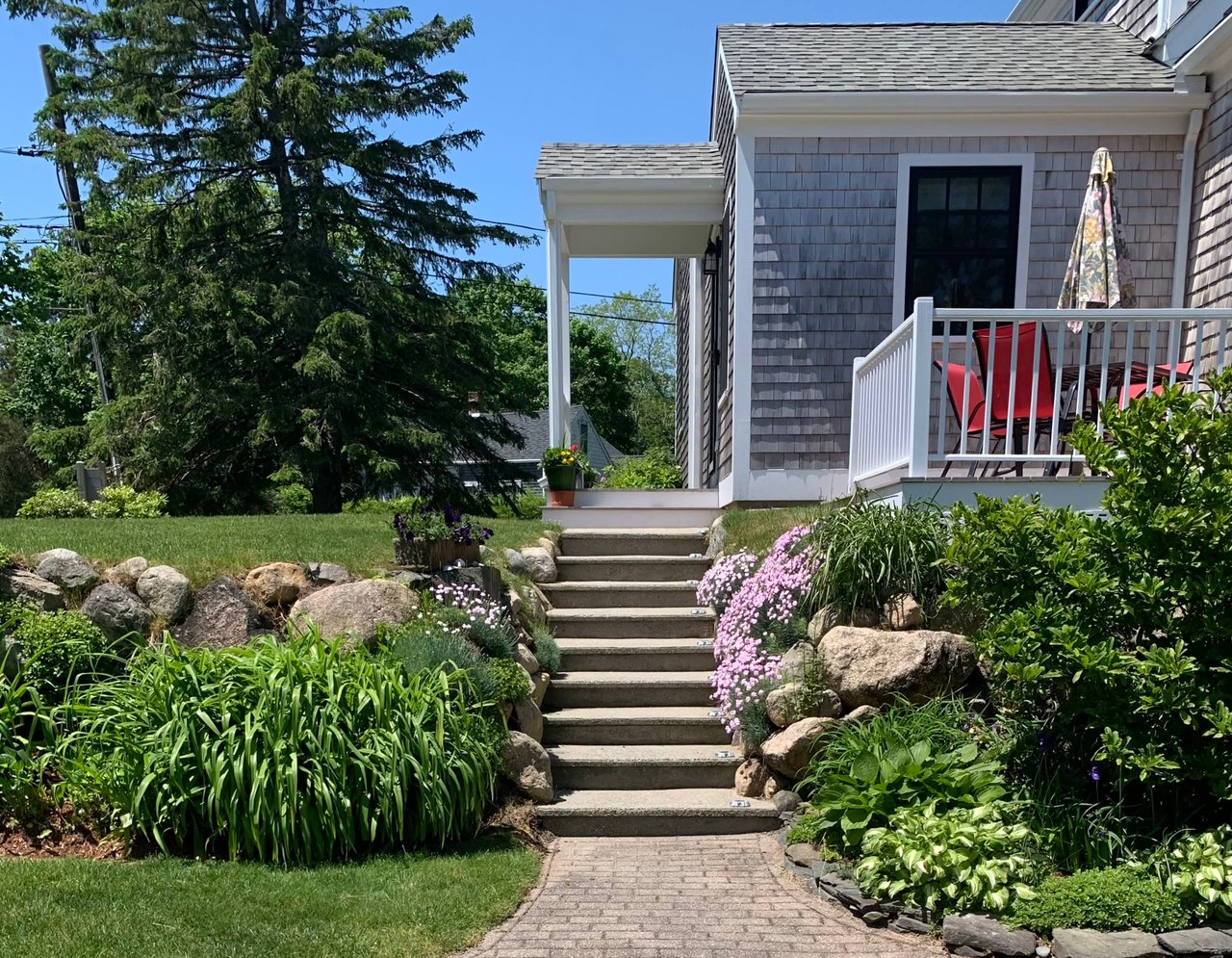
A homeowner on Water Street called her contractor in June with a simple ask: swap the old double-hung windows for something tighter before winter. The contractor gave her a start date. Then someone mentioned the house sits inside the Old King's Highway Historic District, and the start date moved. Not because the windows were a problem. Because nobody had filed anything yet.
This happens constantly in Yarmouth Port, and it happens for a reason most sellers and buyers never hear until they're already behind schedule. The question isn't whether your house falls inside the historic district. In this village, it almost certainly does. The question that actually determines your timeline is whether the work you're planning can be seen from a public way.
The Whole Village Is the District, So That's Not the Question
Yarmouth's Old King's Highway Historic District runs from Route 6 north to Cape Cod Bay, bordered by the Barnstable and Dennis town lines. That footprint covers essentially all of Yarmouth Port. If you own a home here, or you're weighing an offer on one, you are inside the district. There's no edge case to check for, no parcel map to consult hoping you land on the right side of a line.
What that means in practice is that the Old King's Highway Historic District Committee has a say in demolition, new construction, and any exterior change to an existing structure, including paint, signs, solar panels, additions, fences, and stone walls. That list is broad on purpose. The Act that created the district, passed by the Massachusetts legislature in 1973, was written to protect the look of the whole corridor, not just the landmark captain's houses along Route 6A.
So if you're picturing a straightforward building permit process the way it might work in a neighboring town, adjust that picture. Here, the town's Building Department and the Committee run in sequence, not in parallel.
Two Paths, One Fork in the Road
Once you know a project needs review, the real fork in the road is whether it's visible from a public way or place. That single fact splits every application into one of two tracks.
- Certificate of Appropriateness. Required for anything visible from the street or another public vantage point. This path includes a public hearing.
- Certificate of Exemption. Available for work that can't be seen from a public way. No hearing required.
| Certificate of Appropriateness | Certificate of Exemption | |
|---|---|---|
| Triggered by | Work visible from a street or public place | Work not visible from any public way |
| Public hearing | Required | Not required |
| Typical projects | Front-facing additions, street-side siding or roofing, visible fences, new signs | Rear additions screened by the house itself, interior-facing bump-outs, unseen mechanical changes |
This is the detail that changes how you plan a renovation in this village. A rear addition tucked behind the house, invisible from Route 6A or any side street, can often move through the exemption path without ever going before the full Committee. The same addition built on the front of the house, in full view of the road, goes through a public hearing instead. Same scope of work, same contractor, two entirely different calendars, and the difference comes down to sightlines, not square footage.
The Calendar Behind the Committee
The Committee meets twice a month, on the second and fourth Monday at 7:15 p.m. in the Hearing Room at Town Hall, with a Zoom option for anyone who can't attend in person. That cadence sounds reasonable until you're the one trying to sequence a listing around it.
Miss the submission window for one hearing and you're waiting roughly two weeks for the next one. And a hearing date isn't the finish line. After the Committee approves a Certificate of Appropriateness, there's a ten-day appeal period built into the process before work can begin. Combine a missed filing deadline with that appeal window, and a project that felt simple on paper can lose a month before a single shingle comes off the house.
The Committee can also ask for more before it decides anything. In one case from the town's own meeting archive, an applicant seeking approval for new construction was asked to table the application until topographical drawings could be completed, pushing the decision to a later date entirely. In another, a homeowner started exterior stair work on a detached garage believing the change was minor, only to be told partway through that it counted as major and had to stop until the paperwork caught up. Neither of those homeowners set out to create a delay. The delay was already built into a process they didn't know existed until they were standing in the middle of it.
None of this means the Committee is difficult to work with. Reading through its meeting minutes, most applications move forward without much friction once the materials are on the table. Roofers and window installers who work this corridor regularly know the drill: bring elevations, bring the shingle or trim color, bring the manufacturer spec sheet, and most straightforward projects clear the hearing on the first pass. The friction shows up for people who didn't know a hearing was coming.
Three Offices, One Reputation
Part of what slows homeowners down here has nothing to do with the Committee itself. It's figuring out which office to call in the first place. Yarmouth Port sits near three separate bodies that all get lumped together as "those historical folks," as the Historical Society of Old Yarmouth put it on its own blog: the Historical Society itself, which is a private nonprofit and membership organization, the Yarmouth Historical Commission, which has its own separate authority over demolition of older structures outside the Old King's Highway boundaries, and the Old King's Highway Historic District Committee, which is the only one of the three that actually administers the 1973 Act and signs off on your renovation plans.
If you call the Historical Society hoping to get your replacement windows approved, you'll get a friendly answer and a redirect. The paperwork that actually clears your project runs through the Committee, and the Committee alone.
What This Means for a Listing, or a Purchase
For a seller, the practical move is to sequence backward from the Committee's calendar rather than forward from your contractor's. If pre-listing work touches anything visible from the street, whether that's new siding, a repainted door, or a rebuilt front porch, get the application in early enough to survive a possible second hearing cycle and the ten-day appeal window that follows approval. Work that stays out of view, like a rear mudroom addition or a garage interior, may move through the exemption path without ever touching the public hearing calendar at all, which is worth knowing before you assume every project needs the same runway.
For a buyer, the same math applies in reverse. A property's Old King's Highway address is often marketed as part of its charm, and it is. But the same review that shaped that charm will also shape your first exterior project after closing. Front-facing work plans for a longer runway than the same scope tucked behind the house.
This is exactly the kind of sequencing question The Cape House Team walks through with sellers preparing a listing and buyers weighing their first renovation. Staging, professional photography, and a remodeling referral only pay off if the timeline behind them actually holds, and in Yarmouth Port, that timeline has a public hearing built into it more often than people expect.
A Few Quick Answers
Does every exterior change need a public hearing? No. Only work visible from a public way requires a Certificate of Appropriateness with a hearing. Work that can't be seen from any public street or place can often qualify for a Certificate of Exemption instead, with no hearing required.
Who do I actually contact to start the process? The Old King's Highway Historic District Committee, not the Historical Society of Old Yarmouth and not the Yarmouth Historical Commission. All three get confused for each other, but only the Committee reviews exterior renovation applications under the 1973 Act.
How often does the Committee meet? The second and fourth Monday of each month at 7:15 p.m., with a Zoom option available for those hearings.
Ready to plan a Yarmouth Port renovation, listing, or purchase around a calendar that actually holds? The Cape House Team can walk you through the sequencing before your contractor sets a start date. Start Your Cape Cod Story.